We first attempted to visit Peak Rail some years ago, however a lack of cash and a ticket machine which was unable to deliver a ticket without cash frustrated that aim and it was abandoned. Today it is a planned part of our return journey from Yorkshire. commencing at the right end of the line – and a free car park – at Rowsley South. I must admit I have always had a view that the line was both longer and larger than I found it to be. The line is about 3.5 miles long and they would like to extend about 3/4 mile to Bakewell. Beyond that the former line is given over to the Monsal train so further extension is unlikely. Rowsley South station is new and to me feels hidden behind an industrial estate. The original Rowsley station building is now a part of the Peak Village shopping outlet.
750 Waleswood Rowsley South 20-6-26
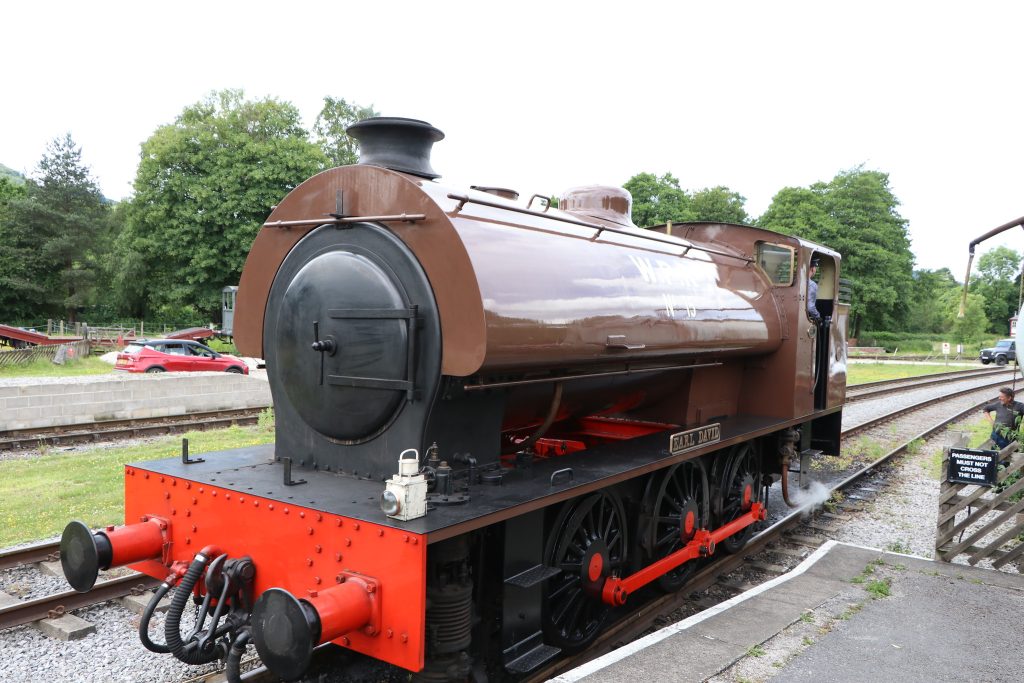
A lost opportunity was either a lunch or tea train (which absorbs all of the numerous waiting passengers) which departed as we arrived headed by ‘Waleswood’ a Hudswell Clarke locomotive from 1906 leading a somewhat peripatetic life in preservation joining the Peak Rail fleet in 2024.
Matlock 20-6-26
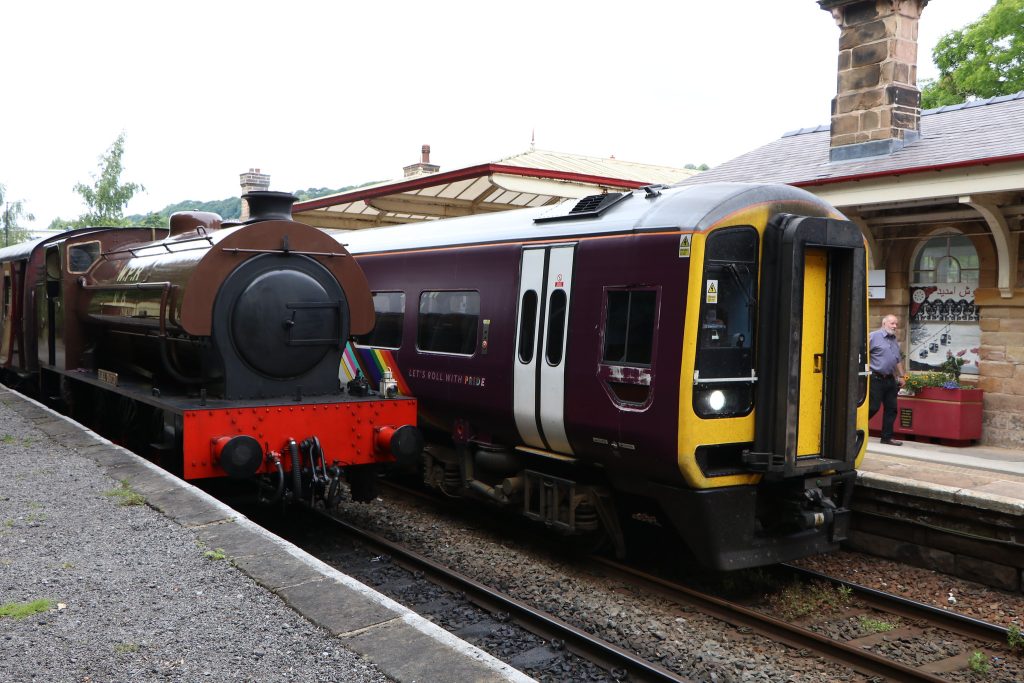
By comparison our service train was almost empty when it leaves and the locomotive 2183 ‘Earl David’ has a very gentle time as we descend over the forty minute journey to Matlock (which I visited using the East Midlands service when I had a Heart of England Rover in 2025). 158773 is the unit visible.
2183 Earl David Matlock Riverside 20-6-26
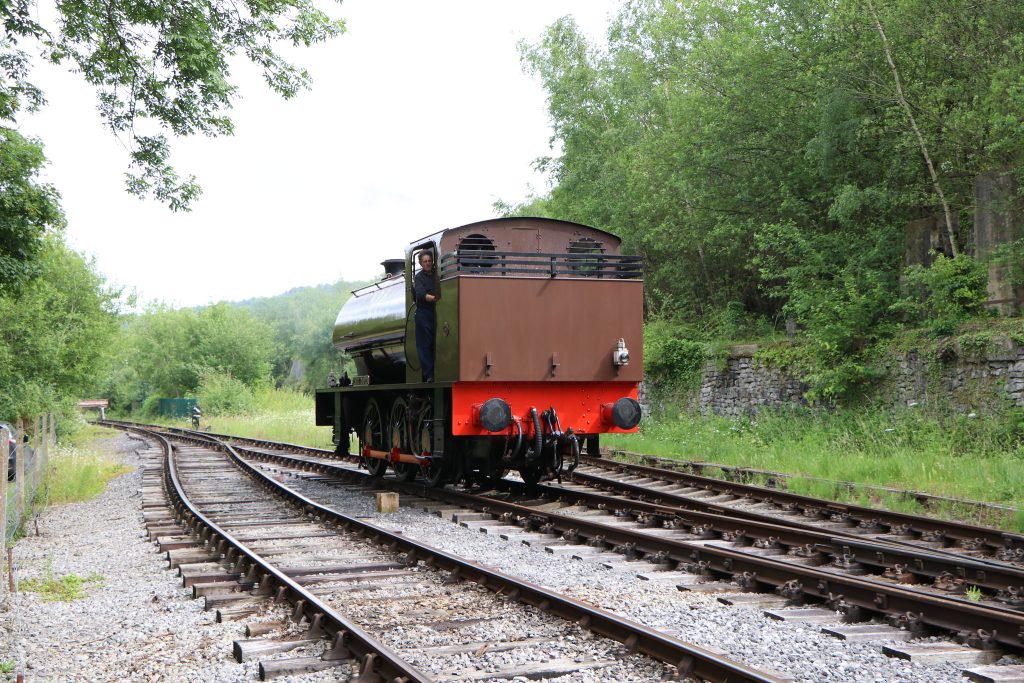
The locomotive propels the train back to Matlock Riverside where it can run round the coaches and return to the front of the train. Thereafter the return journey is much harder work for the locomotive as it has to work hard to lift us up the gradient to Rowsley South.
The railway appears to have a huge amount of rolling stock in sidings adjacent to Rowsley South station, how much of it can and will be restored is hard to know. I think it might be good to extend to Bakewell but at the moment I do not feel it is carrying enough passengers to work. Perhaps we managed a low business day of course.
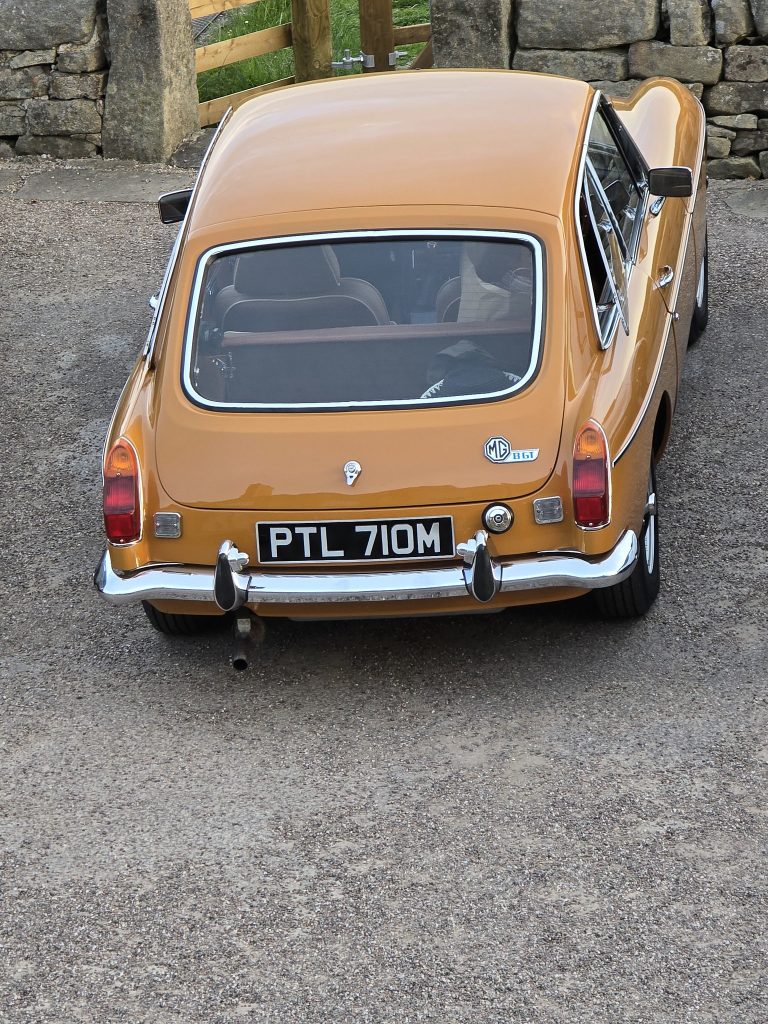
MGBGT Cavendish Hotel 20-6-26
Having completed our round trip we drive past Chatsworth House to find our hotel for the evening. In the car park was this stunningly restored MGB GT which is beautifully restored version of the car (TVR 973K) which I owned for nearly two years in the mid-eighties. This one looks to be in excellent condition – the internal leatherwork looks far better than my car ever did.
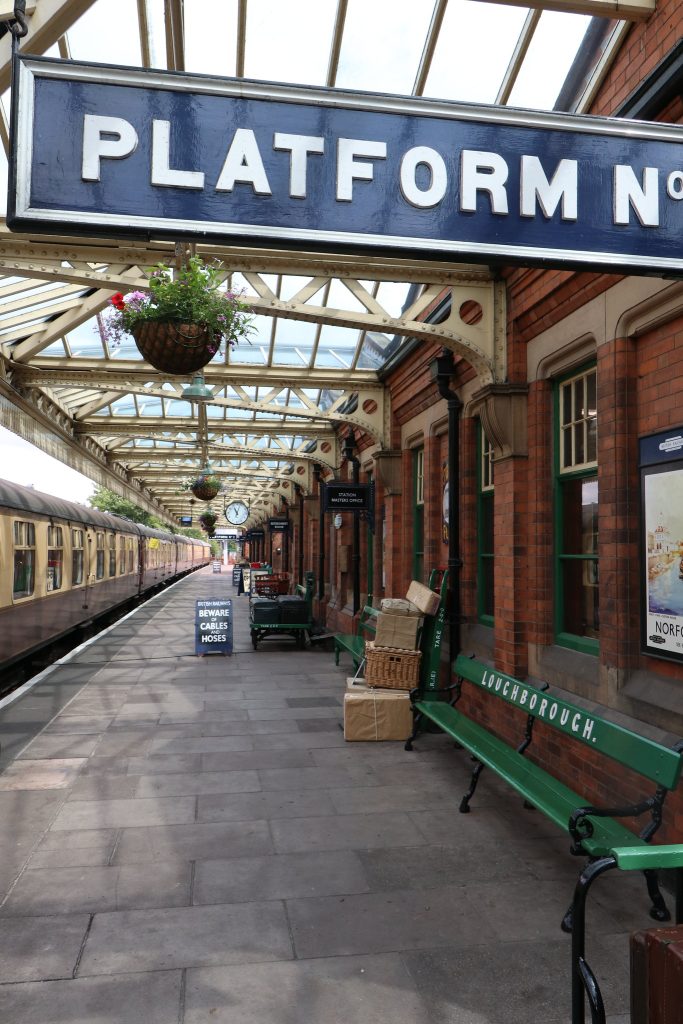
We are on our way to Yorkshire and I have dropped Jackie in Central Loughborough which means I am free to ride the current Great Central in full. On our last visit we took the Mountsorrel branch and on a previous visit only travelled between Quorn and Birstall and Belgrave which has adopted the name of Leicester North having been moved about 100m south and within the boundaries of Leicester, the original station was demolished but they were very close. Today is a full fat run!
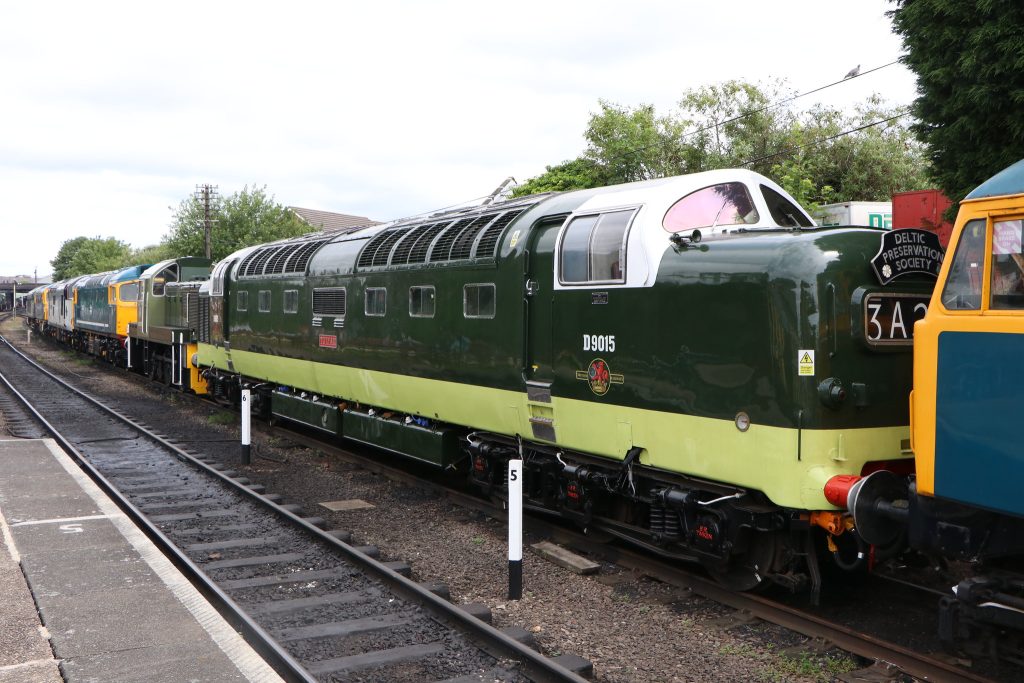
D9015 Loughborough 18-6-26
I arrive in plenty of time for my service and have time to walk past the line up of diesels including the Deltic which is due to return to service in the near future. I suspect I do not have enough time to visit the loco shed which sits astride the line and will be removed prior to be reconnected to the line northwards.
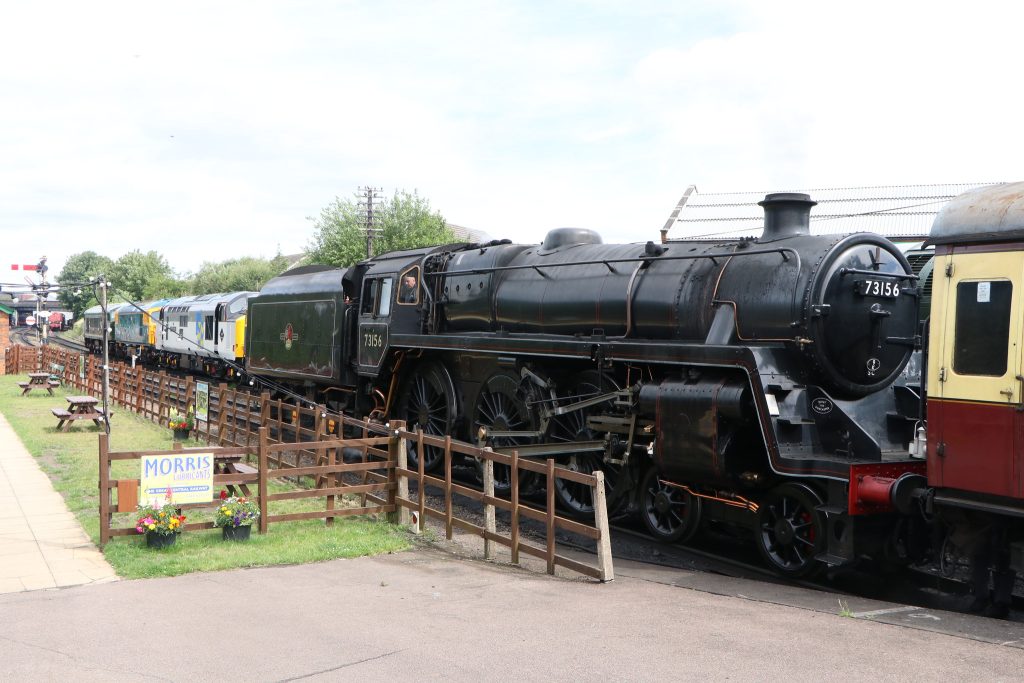
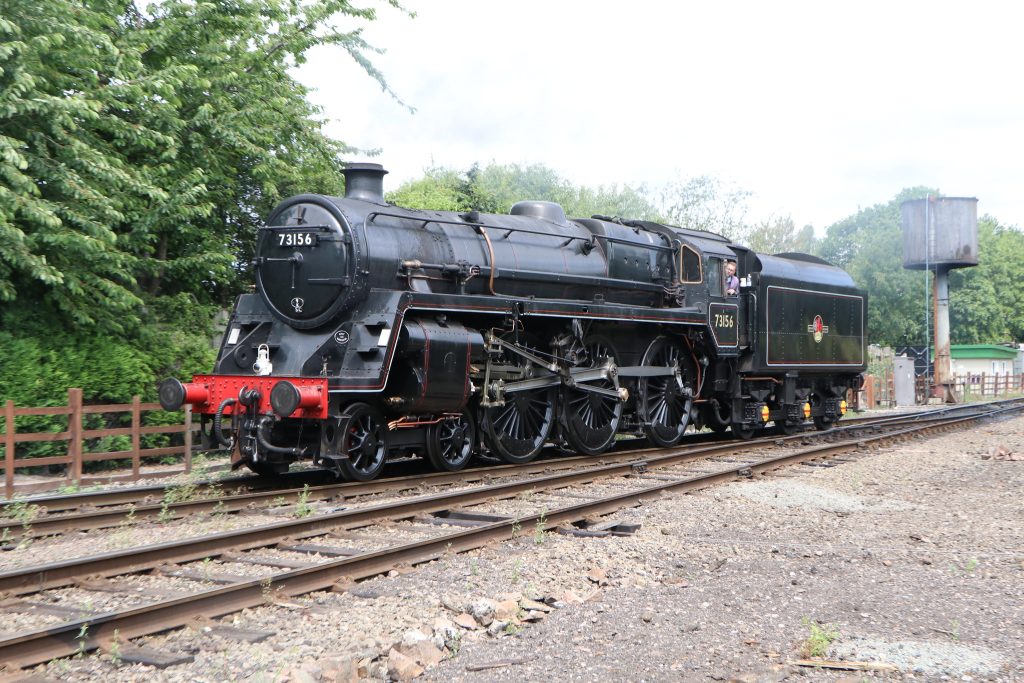
73156 Loughborough 18-6-26
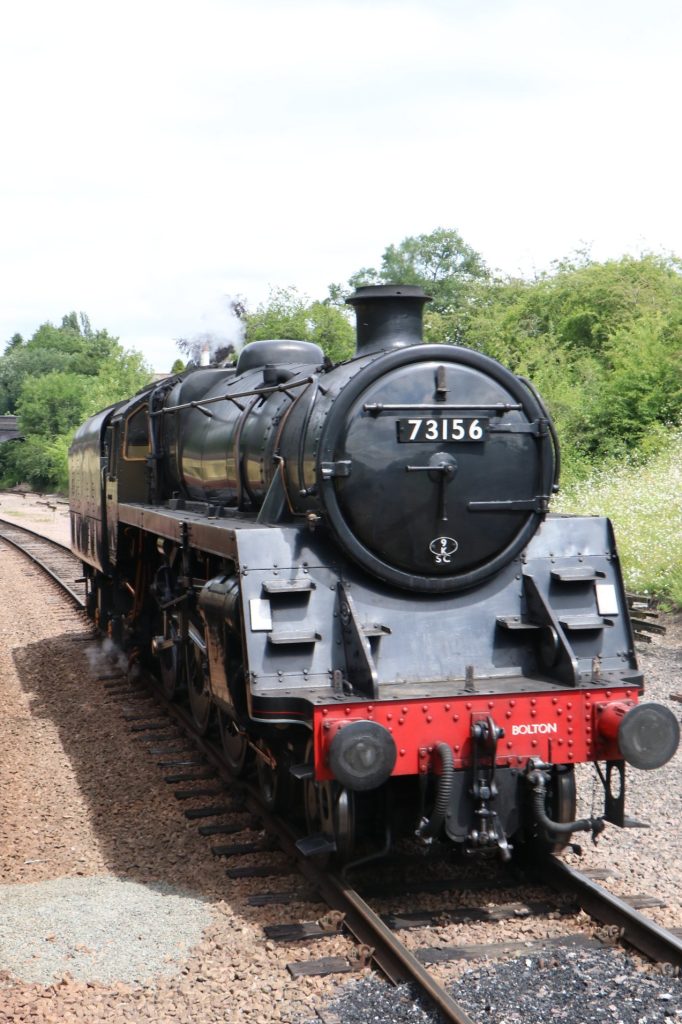
We are awaiting the return of the first service and it is steadily getting later and later. No announcement as to the cause of the delay and eventually it arrives. 73156 runs around and we are advised that the time at our destination will be cut to enable the timetable to be recovered. 73156 is a BR Standard 5MT entering service in 1957 working over the Great Central at various times before withdrawal in 1967 when it was consigned to Barry. It returned to steam and service in 2017 so will soon be reaching the end of its boiler certificate probably in 2028.
73156 running round 18-6-26
On our return journey we reach Rothley (pronunciation is questionable but locals seem to use something like Roathley) we stop but do not restart. It seems that the loco is unable to create a vacuum on the train and some fitters attend (the line’s carriage maintenance is undertaken at Rothley). The youngest (and female) member of the team makes several trips to and from the shed to obtain bolts (and presumably nuts) of the right size to effect a repair. After nearly an hour we are on our way once again.
73156 Leicester North 18-6-26
The line is of course part of the London Extension from Nottingham to London opening at the end of the nineteenth century and consequently built to standards current at the time to ensure easy working. In preservation days the line was initially single and shorter and was slowly extended and part double tracked to provide a feeling of a main line – which of course the line was.
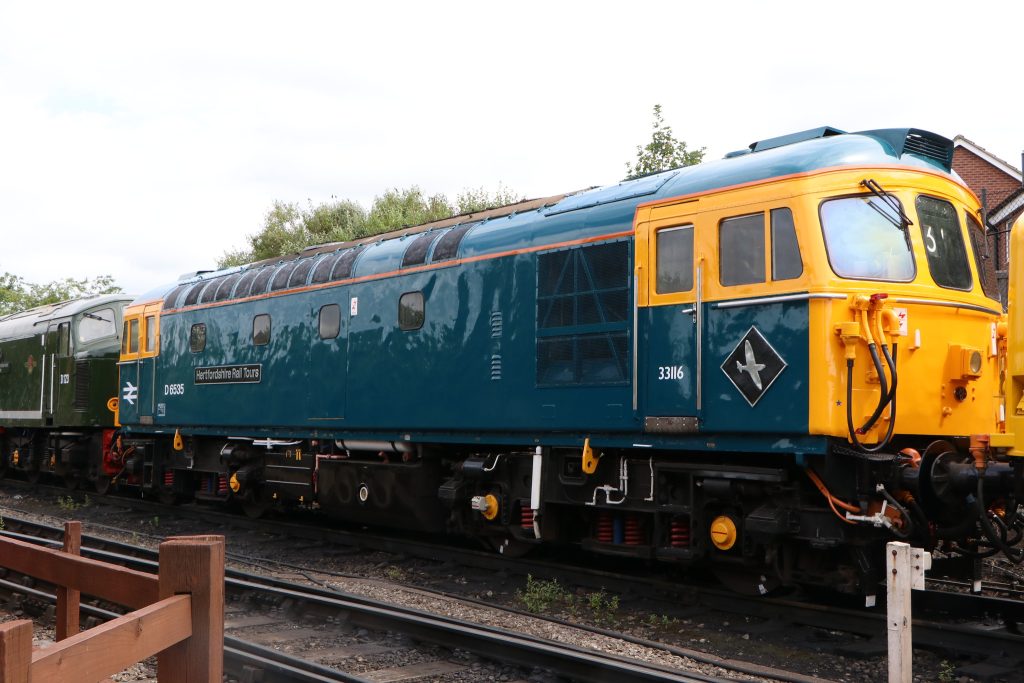
33116 Loughborough 18-6-26
The railway has achieved much over the last 50 or so years and has great plans to link up the missing section and reconnect nearly back to Nottingham. The sums involved are eye-watering and to be honest I doubt that I will live to see it achieved. Green Signals have looked at the project in detail and you can watch a video of their investigation.
Reasonable passenger numbers for a midweek train not in the holiday season. Potentially excess passenger capacity today. It is a lovely run through the countryside and across the Swithland reservoir which was built in a couple of years prior to the railway being built through the area.
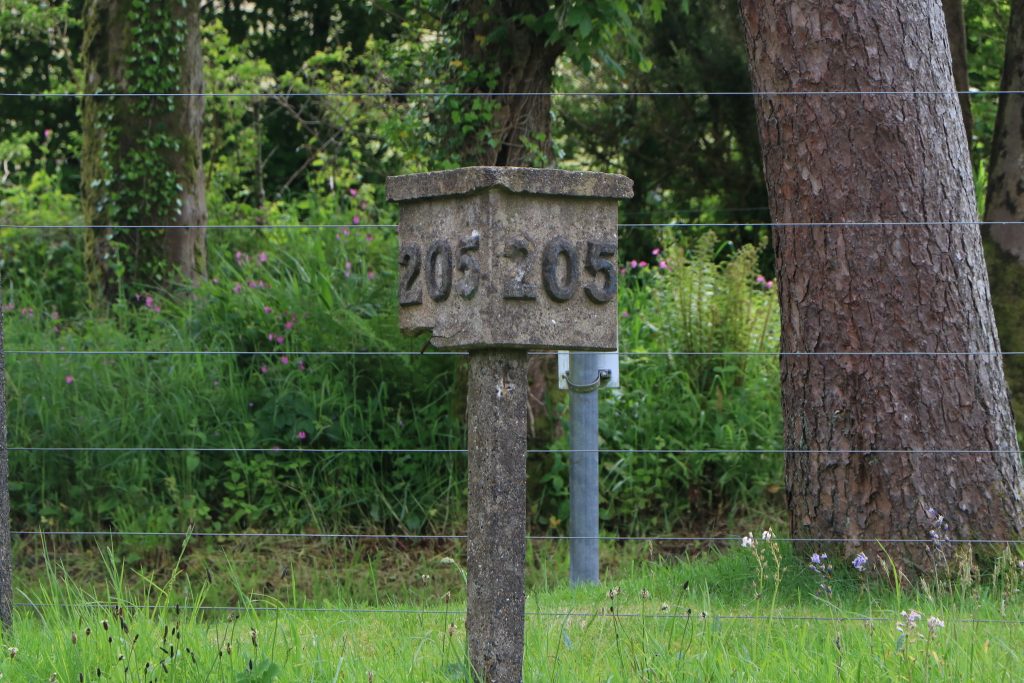
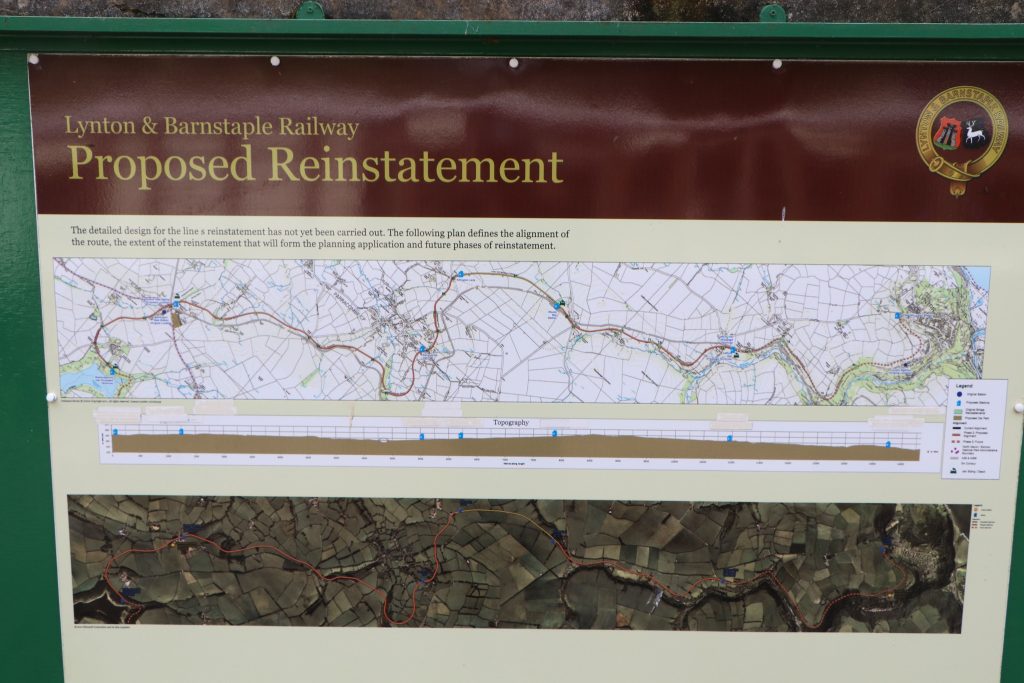
Having been on holiday in Cornwall I felt that as we had the time we should take a slightly devious route into North Devon and visit the phoenix line of the Lynton & Barnstaple. As on our earlier visits it does not yet serve either of the titled towns although in the last few years some grand plans have been hatched they were financially challenging and at the moment the line might see some extensions in future years. It is still 205 miles from Waterloo as the railway measures it.
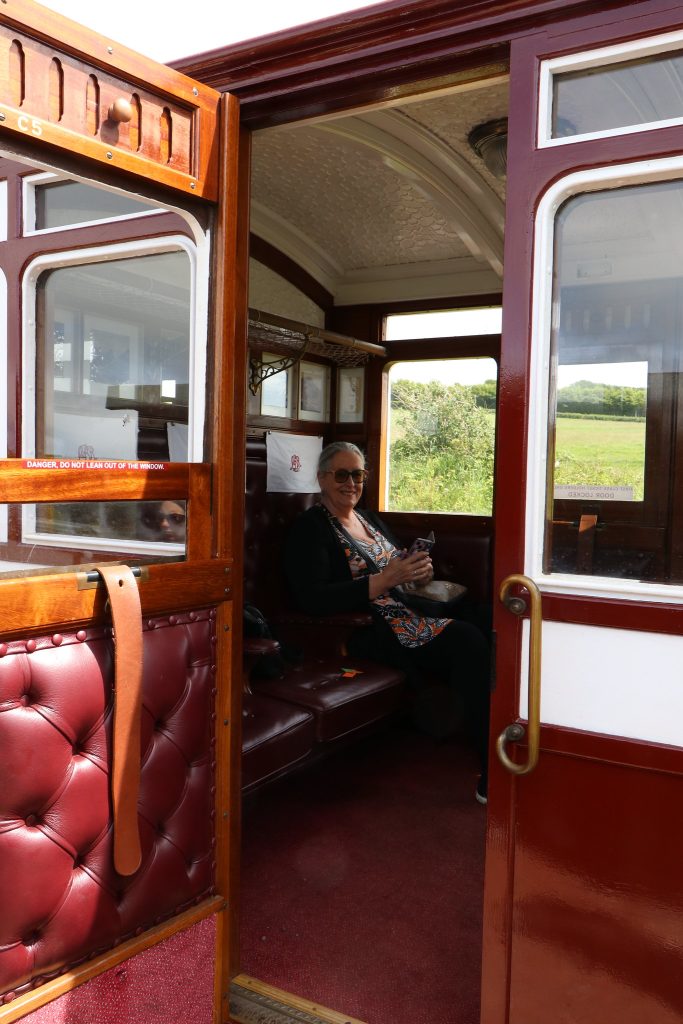
First class comfort 23-5-26
Operations are based at Woody Bay and, in common with many railways we have visited recently there is very little in the nature of brown signs until the site is reached. I am convinced that either I used to be better at finding stations or that signage is not as prevalent as it used to be – does everyone believe that satnav means that brown signs are no longer needed? More signage please. the station is nowhere near the bay after which it is named – which is a decent walk.
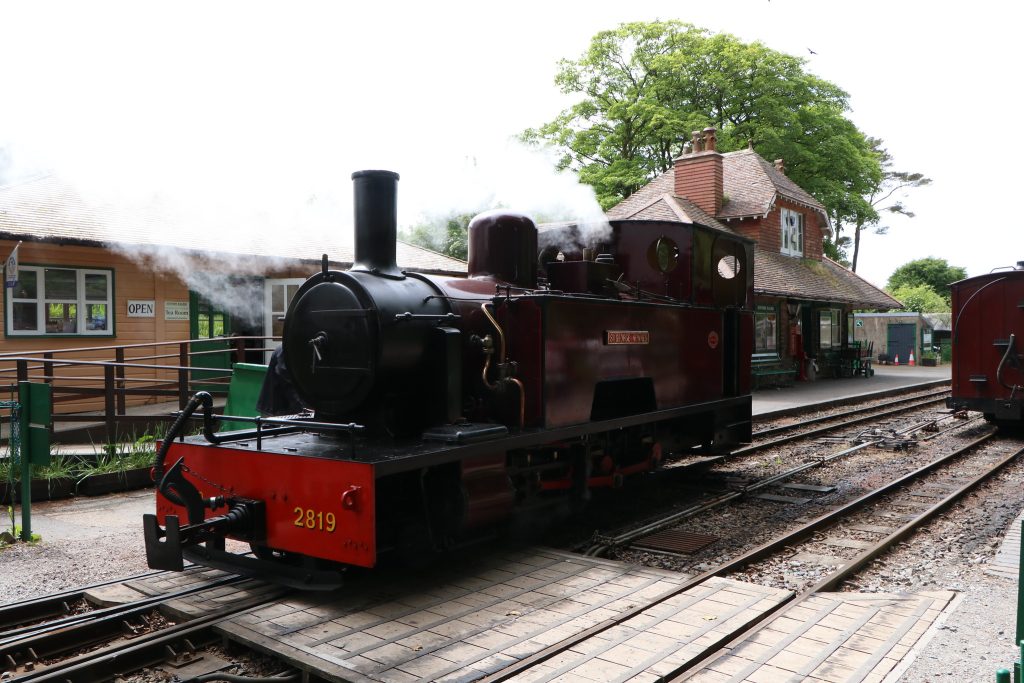
2819 Sir George Newnes 23-5-26
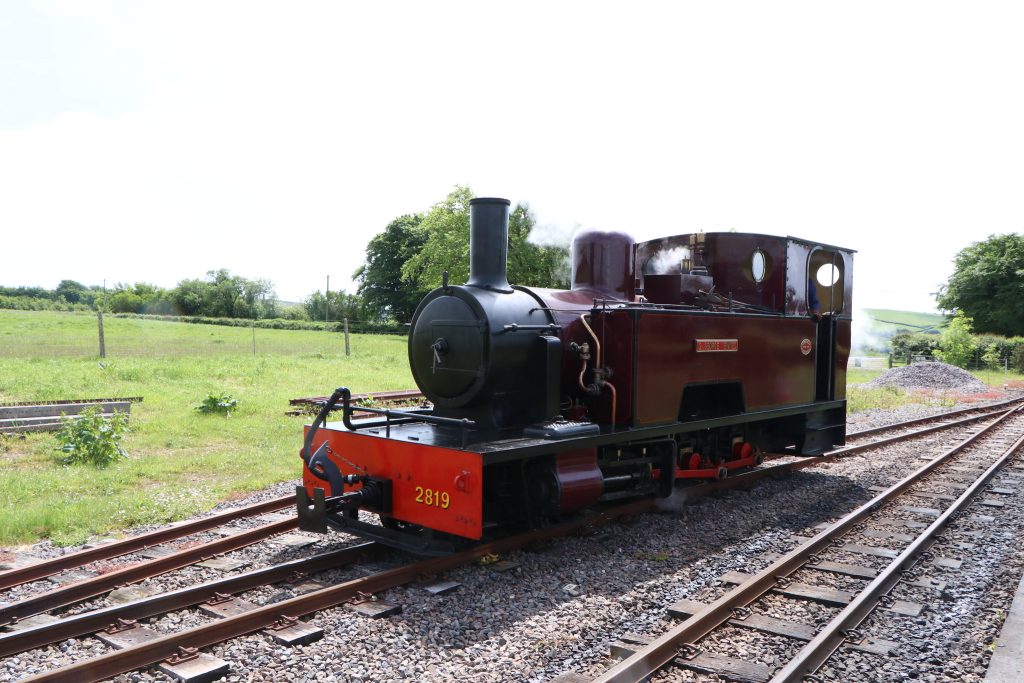
Our last visit was (I believe) in 2013 before Bagnall 2819 “Sir George Newnes” came to the line so I think at that time we were hauled by Axe a Kerr Stuart locomotive. The Bagnall is heading the train today and it is gently simmering near the loco shed whilst we consume a light lunch.
Running Round Killington Lane 23-5-26
We then take our first class compartment (all to ourselves) for the trip. We are sold an all day third class ticket and then for the trip we buy the first class as an extra. We do not have the time today but in other circumstances could go back and forth.
L&B – the future 25-5-26
The line is about a mile each way now – I cannot prove it but I think I first visited when it sis not run so far – not long after opening in 2004 and then again in 2013 when we were able to visit Killington Lane which remains the limit of operation. There have been some grand plans and I believe more trackbed purchased over the years but I honestly doubt I will see it reach either of the named places – I hope it manages it one day.
We have spent a week in Cornwall and having visited the Helston Railway and the Lappa Valley lines last year this time we are able to include the Bodmin Railway in our itinerary. My first visit here was with the line still in BR operation with our charter train reversing at Bodmin General and then wending its way to Wadebridge – a journey no longer possible. I have visited since it became a heritage railway – sometime in the early 2000s and the operation of the line remains much the same as it was on that visit.
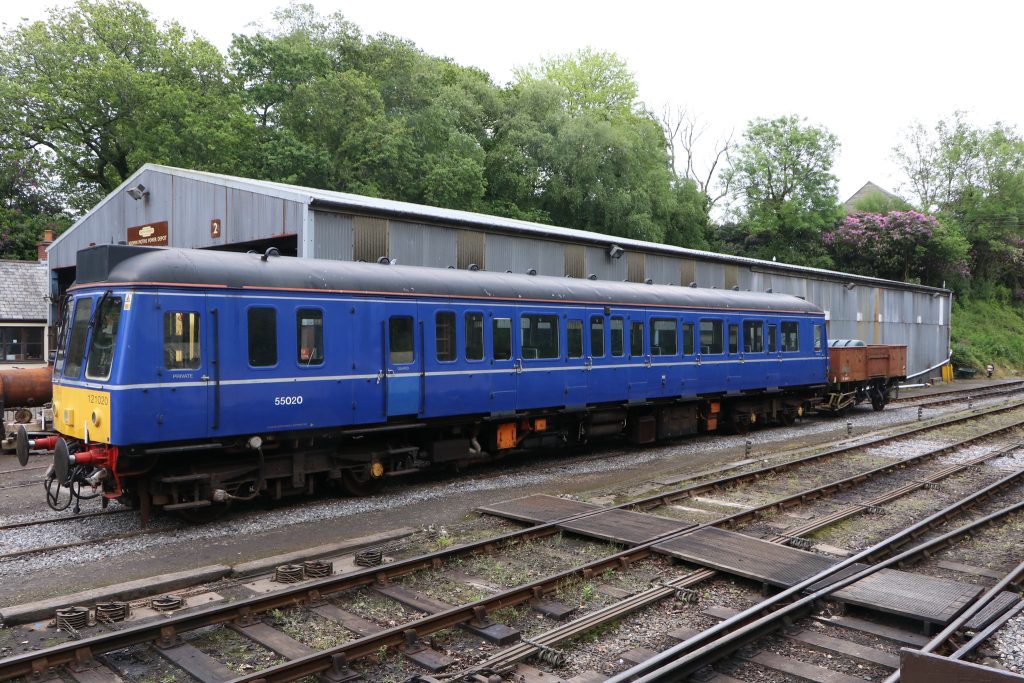
55020 Bodmin General 21.5.26
We arrive on a very hot day – which after a cold week in Cornwall is just slightly annoying. The station car park is full so we have to park up the road which is a downhill walk to the station (at least in one direction). Ticket acquisition at Bodmin General is not overly rapid – the passenger in front being unaware of the service pattern and also wishing to partake in one of the meal bookings which is possible Similarly my purchase takes time as they are allocating seats today and the service is quite busy (no doubt part of the explanation of the full car park).
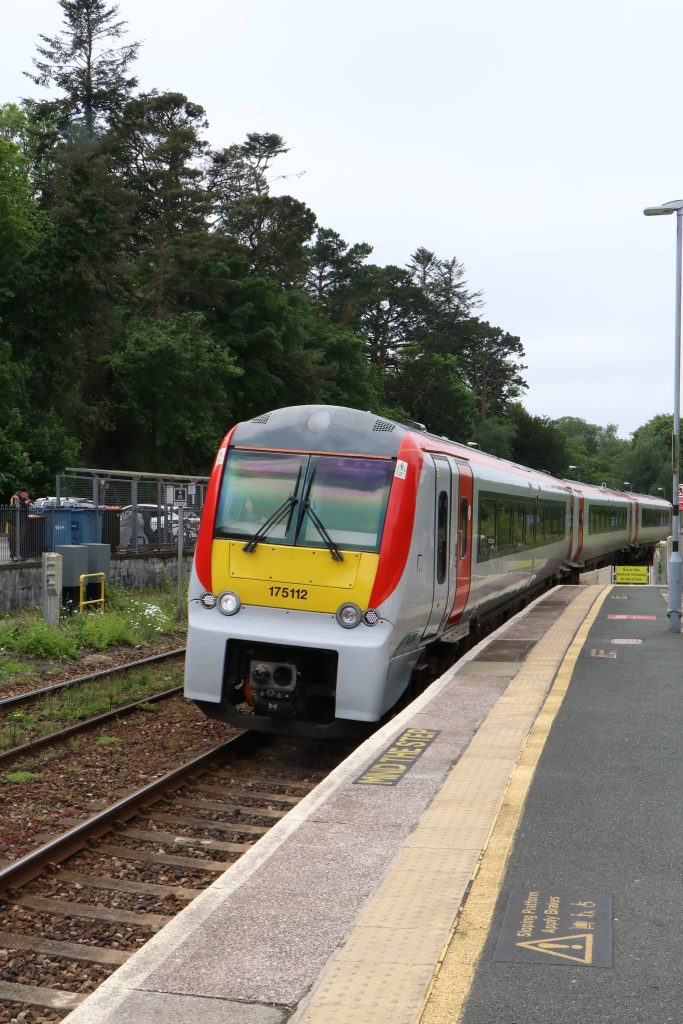
175112 Bodmin Parkway 21.5.26
The railway has a somewhat odd flat “V” shape as a result of history. It is largely downhill from Bodmin General at the point of the V, first to Bodmin Parkway where GWR operates the main line between London Paddington and Penzance. This segment is around 3.5 miles long. There is a connection to the main line but unlike my first ever visit it cannot currently be used by passenger carrying trains. The carriage sheds for the railway are in the angle between the main and branch lines to the west of the station. On arrival at Parkway the main line service is running late and I have my first opportunity to see a class 175 in GWR service.
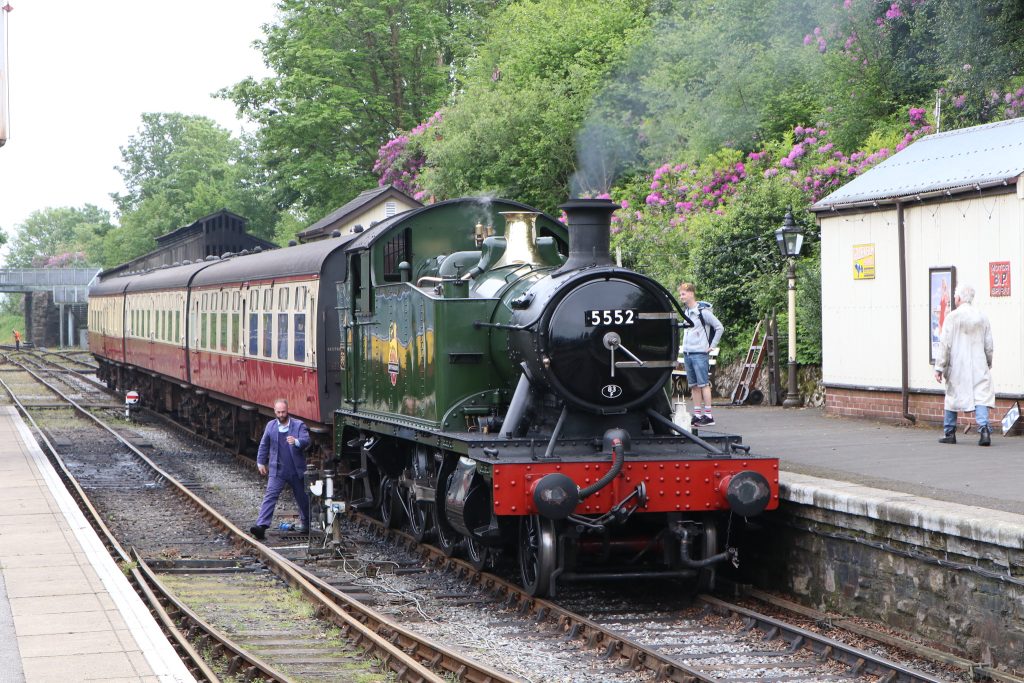
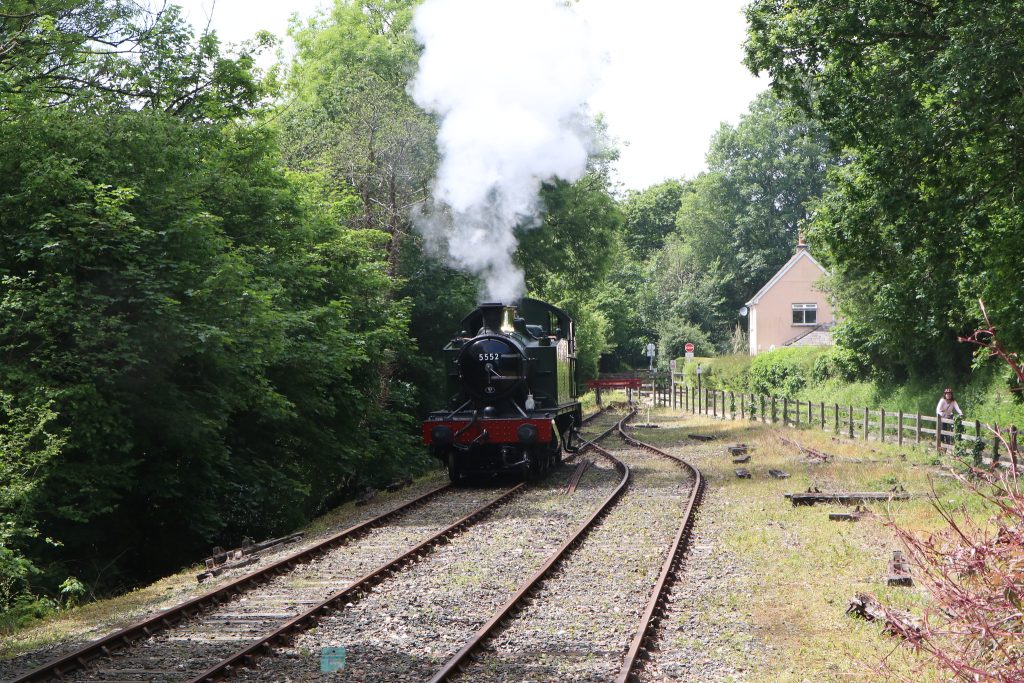
The steam loco runs around ready for the trip back up the hill to Bodmin General. The journey to Bodmin Parkway is largely through wooded countryside with one new station on the route at Coleslogget Halt which is only served (on request) by steam hauled trains on the outward journey as it is on a steep gradient on which the engine needs to keep moving on the return uphill journey.
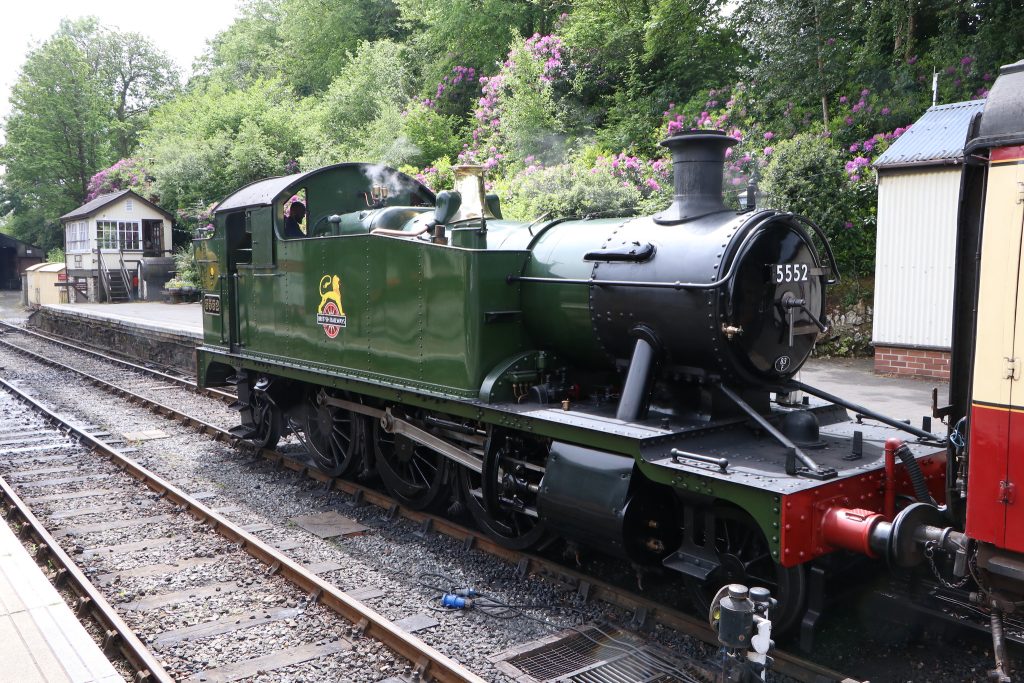
5552 at rest Bodmin General 21.5.26
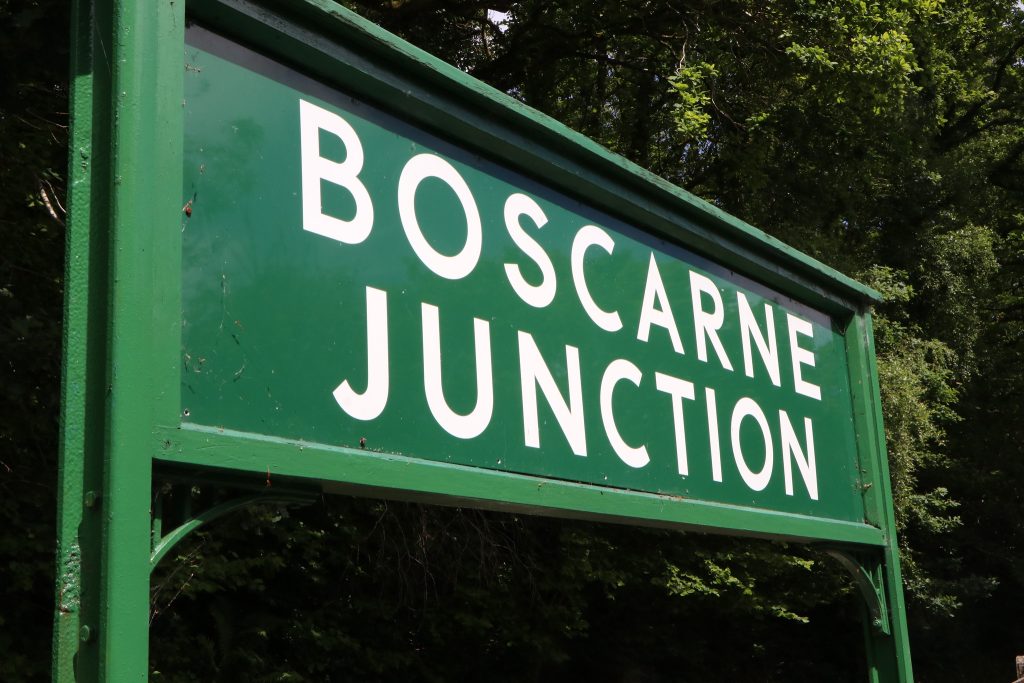
The locomotive runs around again and after a wait we leave the station, this time taking the route to the right and again on a falling gradient we proceed to Boscarne Junction where the GWR line used to connect to the former Southern route from Bodmin North (and Wenfordbridge) to Wadebridge and Padstow following the course of the Camel river. Bodmin General has gained a second platform since my earlier visits and Boscarne Junction is now in Southern Railway colours, having acquired a waiting room for passengers on the platform in 2010 and which was not there on my earlier visit. This second leg of the journey is around 3 miles and the total distance covered today is 13 miles. The Bodmin Railway website advises that the gradients are typically between 1:37 and 1:44. There are no intermediate stations on the other arm of this side of “V” to Boscarne Junction.
5552 running around at Boscarne Jn 21.5.26
Boscarne Junction station abuts the Camel Trail which uses the former rail route to Padstow for walkers and cyclists. At one stage the Bodmin Railway held out hope of re-instating the line as far as Wadebridge but the strength of support for the Camel trail is such that it now seems impossible for any extension towards Wadebridge to be considered and with a few exceptions most railways are not really contemplating extensions at the moment. (Those which are undertaking such contemplations can see that immensely deep pockets are needed).
Boscarne Junction 21.5.26
It is a pleasant ride on a warm day and it is particularly warm walking back up the hill to the car. Once upon a time the LSWR T9 was here but that was some years ago and I think most of the motive power now available reflects the GWR heritage of the line.
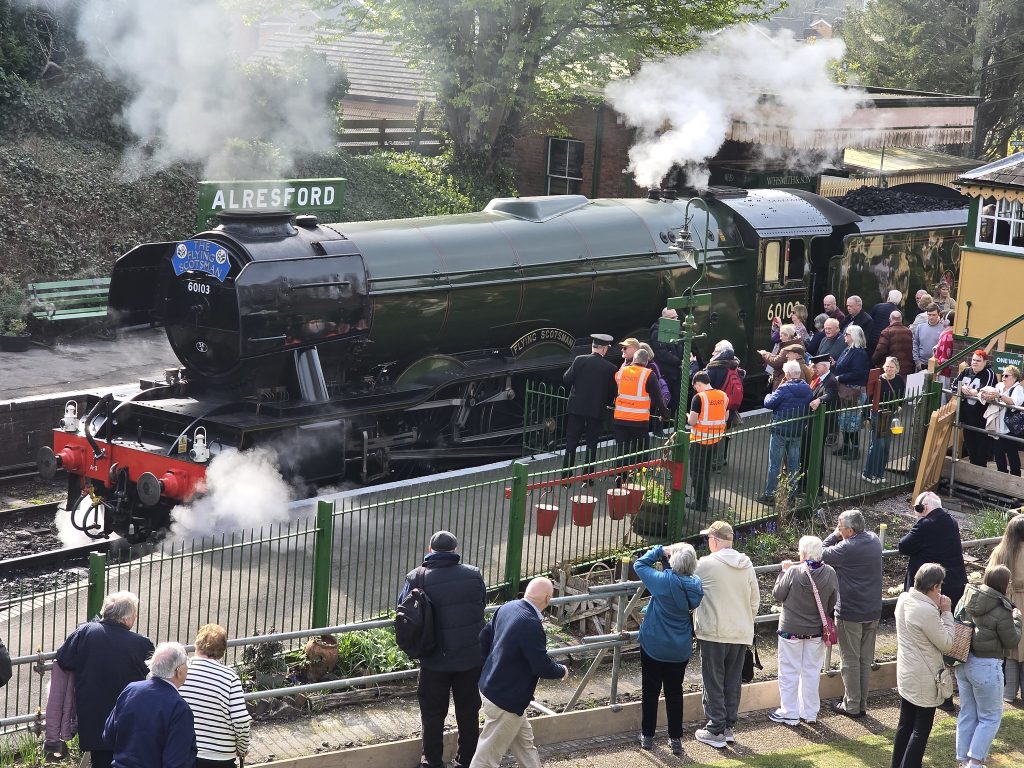
A few weeks ago there was an announcement that Flying Scotsman would be visiting the Mid Hants Railway (MHR). At the time we were on a boat heading to La Gomera and I was desperately trying to book tickets before we lost phone connection as I feared the tickets would all be gone before we reached the island. Luckily two were secured and now here we are.
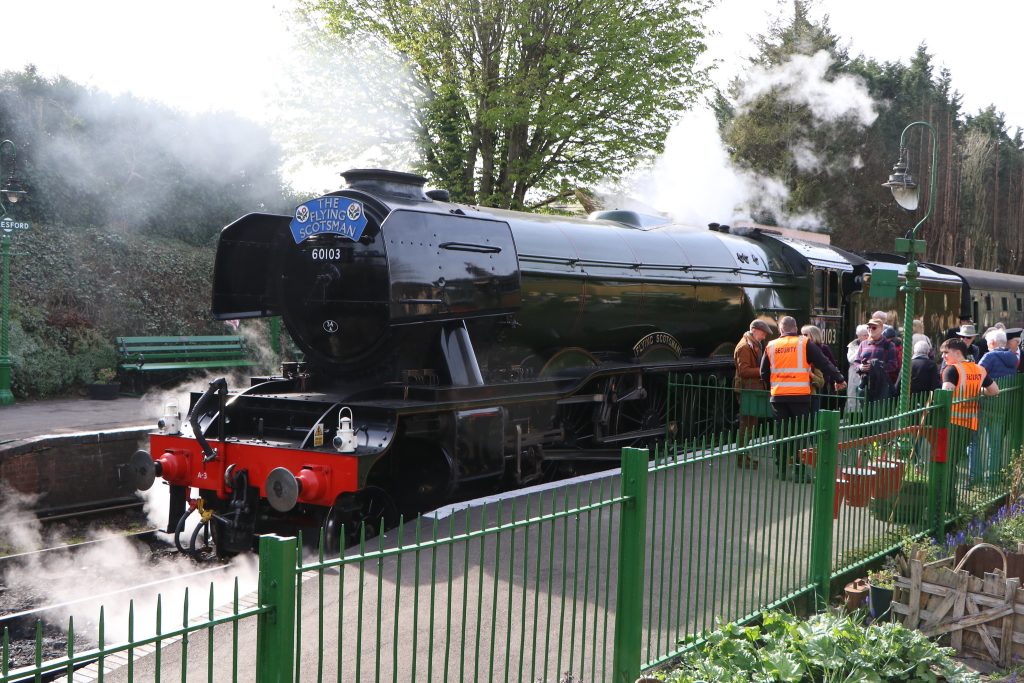
Flying Scotsman Alresford 20.3.26
I accept that the locomotive draws large passenger numbers and to cope with this the MHR has arranged parking out of Alresford – which somehow we drive right past without seeing it. My attention was distracted by the car satnav using a different route and a warning of road closures which did not materialise. Sense of humour diminished the fact that the Alresford car park was not full was something of an anti-climax and we were allowed to park in it. That made things much simpler.
Ivatt Tank Ropley Assisting 20.3.26
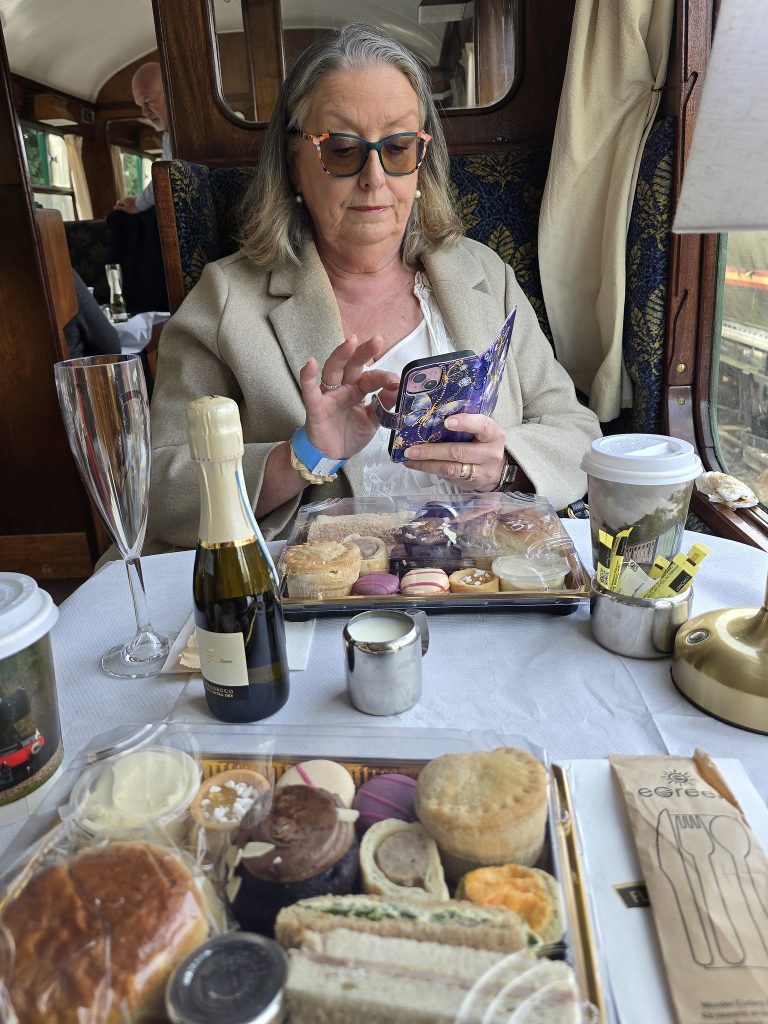
As we were now very early there was a lot of waiting around before we could get our hot drink in a cardboard cup, so not exactly bone china. Then as the hot water cooled down we were held in a queue as we could not access the coaches until the afternoon tea had been delivered to our tables (along with the bottles of prosecco, things started looking up). Once on board it is not long before we are away and I suspect a Mickey Mouse tank at the rear is providing some gentle assistance on the up gradients.
Afternoon tea 20.3.26
After the initial setback the content of the afternoon tea exceeds expectations and it takes most of the trip to Alton to be consumed. Flying Scotsman takes a rest at Ropley for water on each trip – which seems a little excessive but should provide some nice photos on departure. Given that once upon a time the loco could run from Kings Cross to Edinburgh (using water troughs I admit) then a few miles back and forth is surprising to find water being needed on each return trip. The Ivatt tank on the rear cannot stop near a water column at all during the day and a water tanker delivers water to it at relevant times.
Flying Scotsman Ropley 20.3.26
My first visit to the line was on a diesel multiple unit not that long before closure, although I cannot remember why or how I made that journey. There have been subsequent visits but it is noticeable on this journey how much construction of new housing there has been at the villages along the line – there is a lot of it and I wonder now if the line had not been closed how much usage a daily service could enjoy, but without the connection into Winchester it is unlikely to work as I would guess the major demand is in that direction rather than Alton.
Sprinter Alresford 20.3.26
In this regard it is interesting that the line has recently acquired a Sprinter for immediate service which today was working between Alresford and Ropley on a shuttle to enable the Flying Scotsman passengers can use to visit Ropley and get some photographs of the mighty locomotive leaving the water stop on the next trip to Alton.
Canadian Pacific Ropley 20.3.26
Some of the organisational aspects felt a little officious. The actual trip operated smoothly and clearly it needs a lot of effort to host Flying Scotsman and to handle the crowds. Needless to say the price is also significant – but for those wanting to say they have been hauled by the Flying Scotsman then that is the going rate. I might add that I feel misled by the use of a marketing name for the line and hence refuse to acknowledge it. However on the flip side there was a little time to go and see Canadian Pacific which has recently returned to steam but is taking it easy this week. A return visit for a trip behind this loco would be a good idea.
30506 Ropley 20.3.26
Handling the service trains interworked with the special services 30506 which managed to get captured as it was working along the line.
Although it is one of the longest heritage lines in the UK, I have rarely visited the Severn Valley Railway. An initial visit in the mid-seventies was before the service reached Kidderminster and a visit in the mid-eighties on a railtour was more about the journey on a Hastings unit as it was about the preserved railway. There was a brief visit without travelling the line a few years ago to the relatively new “Engine House” at Highley.
Today is a chance to see the line properly. I drive and park at Kidderminster, the southern terminus which has grown a completely new station since my last visit. Plus extensive sheds for the diesel and carriage fleets as we leave the town. I am a little surprised at how full the parking already is this morning and half way to the station I discover the camera battery is completely flat requiring a return to the car. Parking is £4.20 payable by Ringgo.
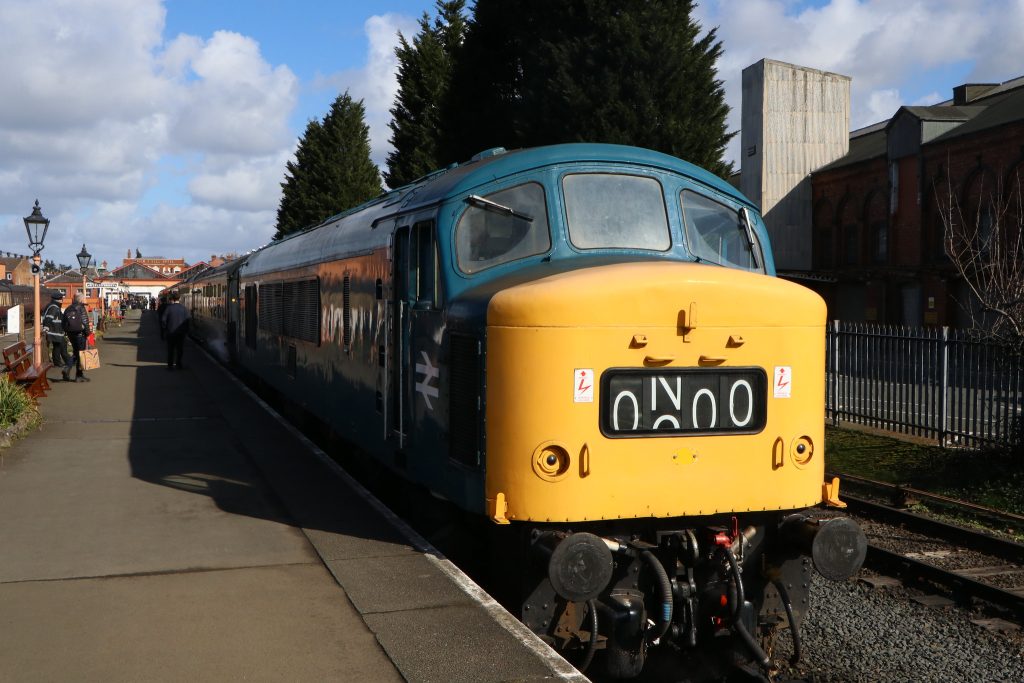
46045 SVR 14.3.26
A Class 46, 46045, is at the head of the train and I take the journey to Bridgnorth in full. There is a fair bit of waiting around at the stations on the way and at several the train length exceeds the platform length. The train is reasonably loaded and during my trips we stop at both of the request stops on the line so travel is very definitely not end to end unlike some lines and the intermediate stops have attractions of their own. We wander through the scenic valley of the river Severn and it is noticeable that the river banks are adorned with fishermen, although it is not obvious if much is being caught.
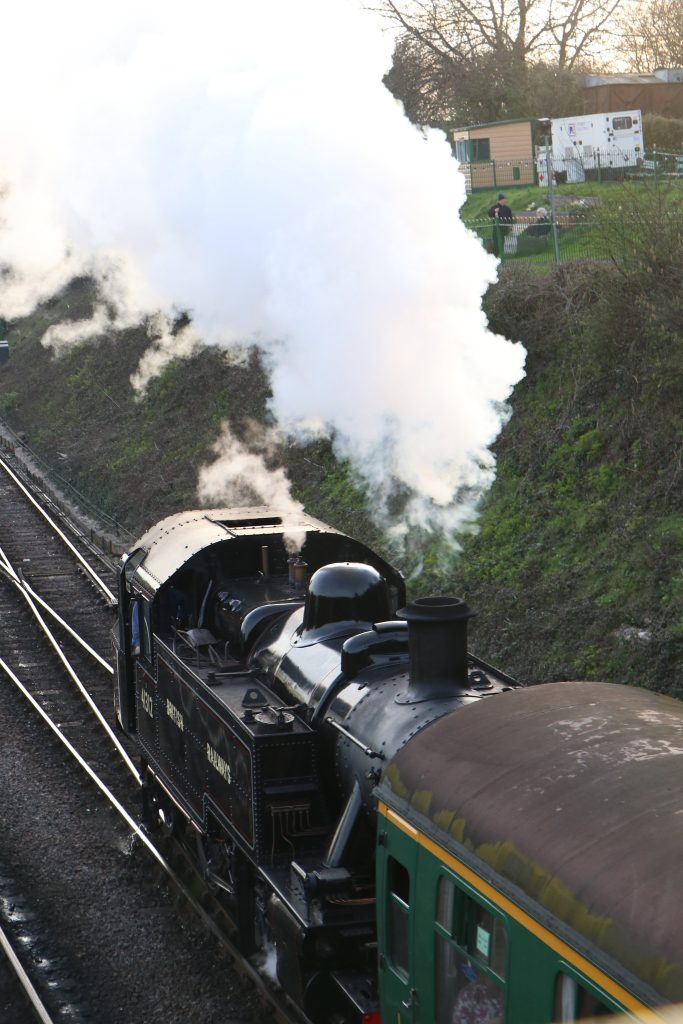
At Bridgnorth I move to the other platform as I want to catch the first departure – which is the steam hauled service today. Power is provided by 1450 and 7714 – a pair of tank engines. 1450 I believe provided the power on the Dart Valley Railway when I visited there in the early 70’s but it has been at the SVR since 2014. It has had a recent full overhaul and a new owner so it may at some point move on from the SVR as it is not powerful enough to handle the current services on its own. 7714 has always resided at the SVR and its current boiler ticket is soon to expire so like many locos these days may not see an early return to steam as again it is probably underpowered for today’s longer trains.
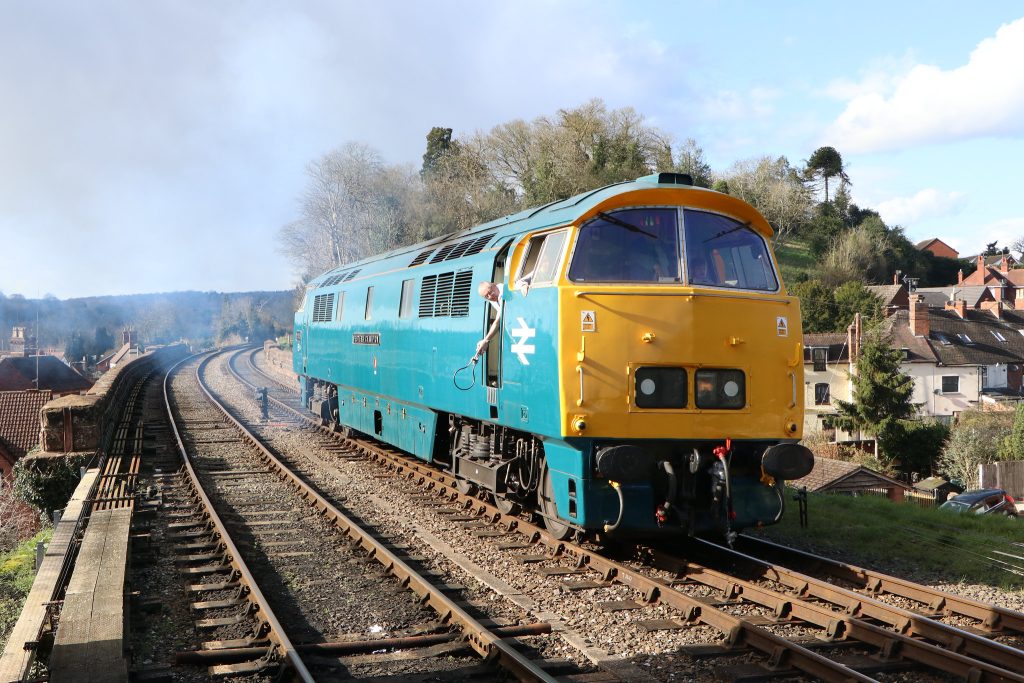
Western Champion SVR 14.3.26
The SVR certainly seems to have a good level of volunteering with visible staff on all platforms and at various points along the lineside undertaking work. It is a large enterprise and the standards are high from the items which can be seen. There is a lot of freight stock which looks fettled alongside the needed coaching stock. A platform extension is underway at Kidderminster to enable the longer trains being used today and at Bridgnorth it was impossible to obtain photos of the two tank engines as they were off the platform.
SVR DMU 14.3.26
A third service was being run by DMU. To me it is a pity that the economics could not justify two out of the three services being steam hauled.
Bradley Manor SVR 14.3.26
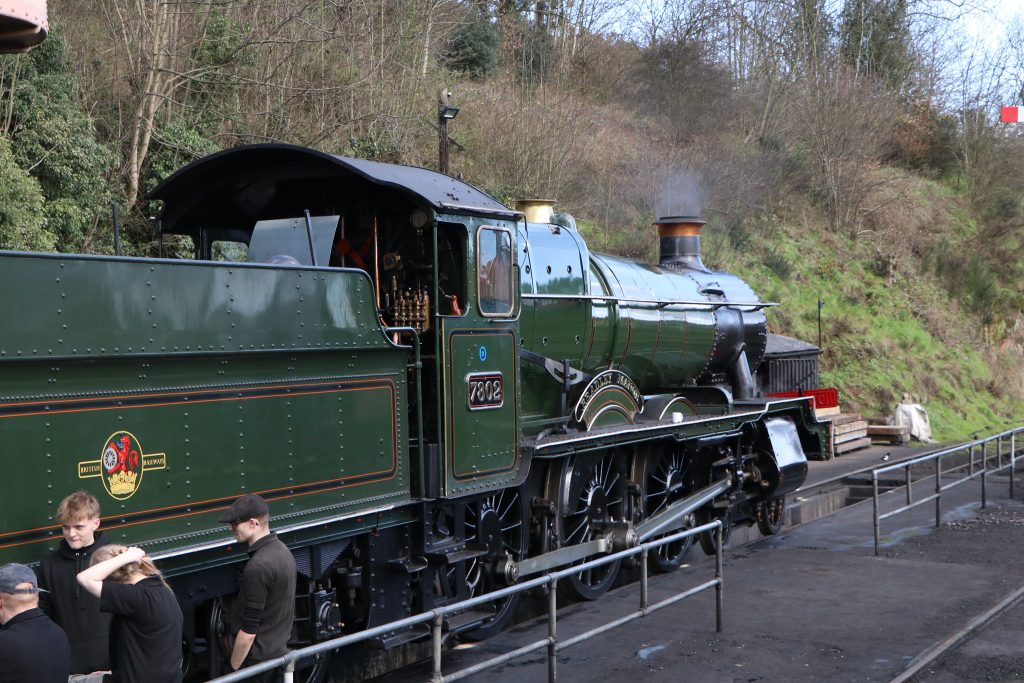
7802 Bradley Manor was in steam and would later haul the boogie train on the evening service but I do prefer steam on general services and for two to be diesel was unwelcome to me but I doubt it was impacting the usage. However once back at Kidderminster I take the steam service back to Bewdley where I can wait for the DMU to bring me back to Kidderminster and the car back to my hotel.
A rather different excursion today we join the Railway Touring Company rail tour from London Victoria to Worcester. This was booked some months ago as it is one of the shorter day excursions which we can join and leave at Staines-upon-Thames.
Operations on the Day
Originally Clan Line was due to haul the train throughout, however we are advised prior to the day that between Gloucester and Worcester the train will be diesel hauled. I see a report that it was not possible to get the locomotive serviced and turned at Worcester so this will happen at Gloucester.
The train arrives at Staines slightly late with a class 47 diesel on the rear. We are in the supposedly air conditioned Mk2F dining coach but it is soon clear that the air conditioning is not fully functioning which makes for a warm morning. We are frequently reminded that using the door windows to observe external activity is ill-advised and it all makes steam haulage ever less attractive.
Being near the rear of the train in an enclosed environment it is impossible to establish which locomotive is doing the work today. The hand out guide does not have the final timings as it shows the train having a water stop in Gloucester Yard rather than going to the station for the locomotive to be removed.
Verbally it is reported that on the outward journey the diesel was only carrying its own weight with Clan Line doing the majority of the work. Shortly before Gloucester there was a signal stop. At this point I was near the front of the train and carefully observed the move away from the stop – and it seemed that Clan Line was doing a significant part of the work to get the train moving again.
The detailed timings from Realtime Trains for the outward journey show that in general the planned timetable was maintained well, coming to a stand after Cholsey as we were running early. There was a water stop between Wantage Road and Challow.
Our return trip ran early from Norton Jn to just before Cheltenham Spa as we took the path allocated to a Cross Country service which was not running due to industrial action. However there was a service which had to leave Cheltenham Spa before we could enter the platform.
We are in the third coach of the train on reversal at Gloucester and for a period of time Clan Line is definitely working hard judging by the thick black smoke in the sky. On the climb to Sapperton Tunnel we came to a stand for a few minutes although this is not obvious from the timings. Although until then I had been able to hear Clan Line working on the restart it was notably quiet and I suspect that the diesel was doing rather more of the work – no proof but we went up the gradient well – which leads me to think that the diesel was helping. Thereafter time was recovered against plan and we were running at close to the locomotive limit regaining lost time as far as Didcot.
At Reading I think we were due to take the re-instated line under the main line to regain the Southern so a small piece of unusual track. In addition the curve from Abbotswood Junction to Norton Junction was track I believe I have not previously covered and which I failed to cover using my Heart of England Rover earlier in the year.
Meals
One of the purposes of this trip was to sample breakfast and dinner – both silver served by the dining team. They work hard in delivering the food to us and of reasonably good quality. Plates arrive early and cool a little too much prior to the food arriving – but it has never been easy to serve perfect meals on trains and it is these days very rare.
Rolling Stock
The stock was as promised Mk 2 air conditioned. The defective air conditioning on the outward journey had been rectified by the time we returned so that was very welcome on a warm day. I would have a personal preference for Mk 1 stock – with windows to hear what is working and let the smuts in. However this is not a universal preference of course.
Modern steam tours are ultra safe of course. However getting a photo at Reading was discouraged for fear of causing delays and even at Gloucester it was a mad dash. I realise people have to be considered stupid but the complete loss of all steam run pasts and even thinking that travellers may want a decent pictorial record of the day seems lost these day. With busy railways crossing the tracks as we did nearly 40 years ago is impossible but it might be nice. At Staines it is not possible to get a photo from the station footbridge – the lower panes are all white not clear – why? Even more exotic how about a bluetooth relay from the cab with commentary from an individual as we pass places, and pick up the sounds of the locomotive – but delivered via a bluetooth signal to a phone or similar and insisting that it can only be heard with earphones so it is not imposed on all travellers?
Summary
It is not a cheap day. I am not 100% convinced it is value for money. It was a pleasant day out but I am not that keen to repeat and book another trip in the near future.
The Helston Railway is the heritage line sited furthest west in the country. They have now preserved a section of line about 1 1/4 mile long between Prospidnick and Truthall Halt. Services commence at Prospidnick which is a couple of miles from Helston and the line runs towards Helston. The line used to run from the GWR main line Gwinear Road – the station closing with the branch on 5 October 1964. So the line was dormant for a long time.
Prospidnick Halt was bult part of the preservation effort and there is some hope of a small extension a short distance further north at some point in the future. Access to Prospidnick is via Trevarno Farm passing through the farmyard before it opens into a slightly untidy space. The track here has a coach with a booking office and a buffet and the intention is to build a station here adjacent to the parking. At the moment having bought tickets we walk across the viaduct over the road below to Prospidnick platform from where the service train departs.
There is an intermediate station at Trevarno which was the original starting point of the heritage services but now is only a request stop and we did not stop here in either direction, I suspect there is next to no parking but some items of stock are stored here with other items needed for the railway.
Our destination is the aforementioned Truthall Halt which is an exact replica of the original GWR Halt and is 1 3/4 mile from Helston. It originally reopened in 1905 and was reopened in 2017. There have been plans for further extension but these seem unlikely at present – planned to a new terminus closer to Helston but this requires a large viaduct to be restored – some clearance of the track bed has been undertaken.
Andrew Barclay loco 446 Kingswood
Our transport has a diesel engine at the Prospidnick end of two coaches with a driver position at the front of a former DMU vehicle at the Truthall Halt end of the train. It is a very gentle journey through the countryside between the two. There have been a couple of seasons of steam haulage in recent years but for the moment trains are being handled by “Kingswood” an Andrew Barclay locomotive from 1959, works no 446, although I am not sure if it is owned by the railway or not. A suburban coach and the dmu driving trailer make up the consist.
The journey takes about 10 minutes, then 15 minutes to change ends (and we change coach) and then ten minutes or so back. All of the volunteers around are very friendly and there are a few other passengers this morning – although not a large number. Operations are on a limited number of days in the year so we are lucky to have included a bank holiday Monday in our week away to permit travel.
It provides a vision of how preservation worked for a long time – just a short line and a quick hop there and back – even shorter than the early Bluebell I suspect. Modern preservation is hugely business driven simply through size whereas here it feels mainly down to volunteers, although I suspect that it has needed a decent source of money to achieve what is here. It will be interesting to see if the extensions can be achieved and if the steam locomotive overhaul can be completed and returned to service – big challenges for a small railway.
I have previously been advised that T3 563 will be in service today on the Swanage Railway. I first saw this locomotive in (I think) the very early 70’s at Clapham Transport Museum – certainly before I went to University in 1972. A stylish Victorian product by William Adams (built in the long closed Nine Elms locomotive works) most of the class had been withdrawn by 1933 but three survivors soldiered on with 563 being refettled for light steaming duties at the 100th anniversary celebrations at Waterloo Station in 1948.
Then as part of the National Collection the locomotive was loaned for stage productions of “The Railway Children” making it to Canada before return to the UK and a decision by the Science Museum that it could be transferred to the ownership of the Swanage Railway Trust in 2017 after three years of negotiation. Subsequently the locomotive underwent a very full overhaul and rebuilding at the Flour Mill in South Wales and I have made very modest contributions to the work undertaken leading to the locomotive returning to active service in October 2023. I was unable to participate in the launch then and I have been waiting for a date when I am able to travel behind the locomotive.
Use in recent months has allegedly been limited as 563 was unable to leave the Swanage loco shed as the turntable immediately outside the shed had been damaged when being used by a Bulleid Pacific and the turntable needed repairs before it could be crossed. However given the age of the locomotive it cannot be expected to be in regular service compared to more modern locos – and at the moment the Swanage Railway works on a one engine in steam service with the second service being provided by either a DMU or class 33 on a rake of coaches. No doubt the economics limit the use of steam.
Factually I do know that in early 2024 563 caused some lineside fires and a spark arrestor was to be added before it could return to active service – so it may be a combination of reasons has been responsible for it being a rare sight in recent months. Today it is so wet that the chance of a lineside fire even without a spark arrestor must be close to nil!
Operations on the Day
563 at Norden
I join the 10:40 train at Norden (the station closest to Wareham and where there is extensive parking as there is no longer a service to and from Wareham unlike my last [undocumented] visit, aided by the service being 5 minutes or so late as the timing was a bit close!
Swanage Timetable for the day
South of Corfe Castle there is a rising gradient of 1 in 80 heading towards Swanage and the loco briefly loses her footing on the damp rails and slips but it is soon brought under control. The steam service operates between 5 and 10 minutes late for the rest of the day whilst I am travelling and this imposes a similar delay on the diesel service as they cross at Harmans Cross.
At Swanage there is a rapid run around and we head back along the line and with a load of five well occupied coaches the locomotive certainly seems to be able to cope well. We do not get any later – although it is steadily getting wetter. I hop off at Corfe Castle to take some photos and then take the return trip to Swanage where this time I leave the station to go to the nearby overbridge to be able to take some photos as it departs on the 12:40 service. As 563 departs a brake van trip also leaves the other platform which to my mind does not enhance the photographs – but in reality a sunny day is needed for that.
563 leaving Norden
I take the next diesel service to Corfe and await 563 arriving from Swanage for some final photos then take the service to Norden where I leave the train and after some final photos head for home.
Costs / Ticket Checks
£27.50 for the line rover plus £4 for parking – with a need to return to the car to put the ticket in the window. Ticket checked on the first train but no further inspections thereafter.
Rolling Stock
Mark 1s throughout. A number of toilets were out of use – that may have just been my bad luck – the stock on this line has a problem in that they do not have any significant under cover storage. A few years ago there was a plan to provide a facility at the Wytch Farm oil facility at Furzebrook which had closed for rail extraction being replaced by pipelines. However the site is protected by various conservation laws and the planning permission for the site required the removal of the rail facilities when no longer needed and no new permission could be granted to the railway for much needed coach storage (and potentially locomotive works which are currently “off-railway”. So stock maintenance is very difficult for the line.
The last documented trip I made to the Bluebell Railway was some ten years ago at the very start of this record. This time around I was accompanied by my grandson, Max, who has been with me on some other undocumented outings to railways down the years. I did make a brief visit in 2015 but only travelled over part of the line and for once did not feel welcomed as they were unable to easily sell me the right tickets.
The initial plan was to do the entire trip by rail as I did last time – after all if the line runs to East Grinstead then making use of the National Rail connection means no driving. However someone, somewhere has not realised that to do so a decent service is needed. An unlikely two minute connection at Redhill (given the GWR operation to that point) and a rather stupid hourly only service to East Grinstead off-peak giving a very poor connections at both East Croydon and at East Grinstead mean that driving is vastly more attractive – when are the TOCs going to realise that leisure travel means having proper off peak timetables again – after all it now dominates. So we arrive by car at Sheffield Park – just like the vast majority of my other visits over the years
In steam are Sir Archibald Sinclair and Camelot. The first is hauling our 10:30 departure from Sheffield Park which is the Mark I rake. We travel up to East Grinstead and then return to Horsted Keynes. With Max being older (and costing me full fare!!) I can point out the meaning of the gradient posts and the different styles of the stations from the eras they represent as well as the replacement brickwork on platform 5 at Horsted Keynes and the branch to Haywards Heath.
LCDR 114
At Horsted Keynes we cross the platform to where the second rake of much older vehicles is waiting behind Camelot and I choose to travel in LC&DR 114 which is the oldest vehicle running today.
The coach was originally on a six wheel chassis but at present is running on a new four wheel chassis built for its return to operation from a previous life as a cottage in Devon.
73082 Camelot
Sir Archibald Sinclair has only recently returned to the railway’s available roster and makes light work of the trip. Camelot on the lighter set does sound like it is being worked slightly harder and certainly the ride on four wheels is at points rougher than in a bogie carriage.
Being the school holidays the railway has a decent number of travellers but I would say that it could be busier. Max now travels on an adult ticket whilst at least my fare is a member’s fare and we are on rovers which seems to be the norm these days.
Downton
A reminder that the Bluebell is often used for filming – this resides at Horsted Keynes.
32424 Beachy Head
After lunch we go into Steam Works and I can introduce Max to Stepney – closing on 150 years old – and amongst others Birch Grove – a loco I would dearly love to see return to service but accept that it is unlikely in my lifetime now. Outside the shed is new build “Beachy Head” – the Atlantic built around an ex-GN boiler which has taken nearly 40 years to go from a bright idea to a locomotive in service. She formally returned to service a few days after we visited the railway – at this time there was the odd wisp of steam so she was being readied for the big day.